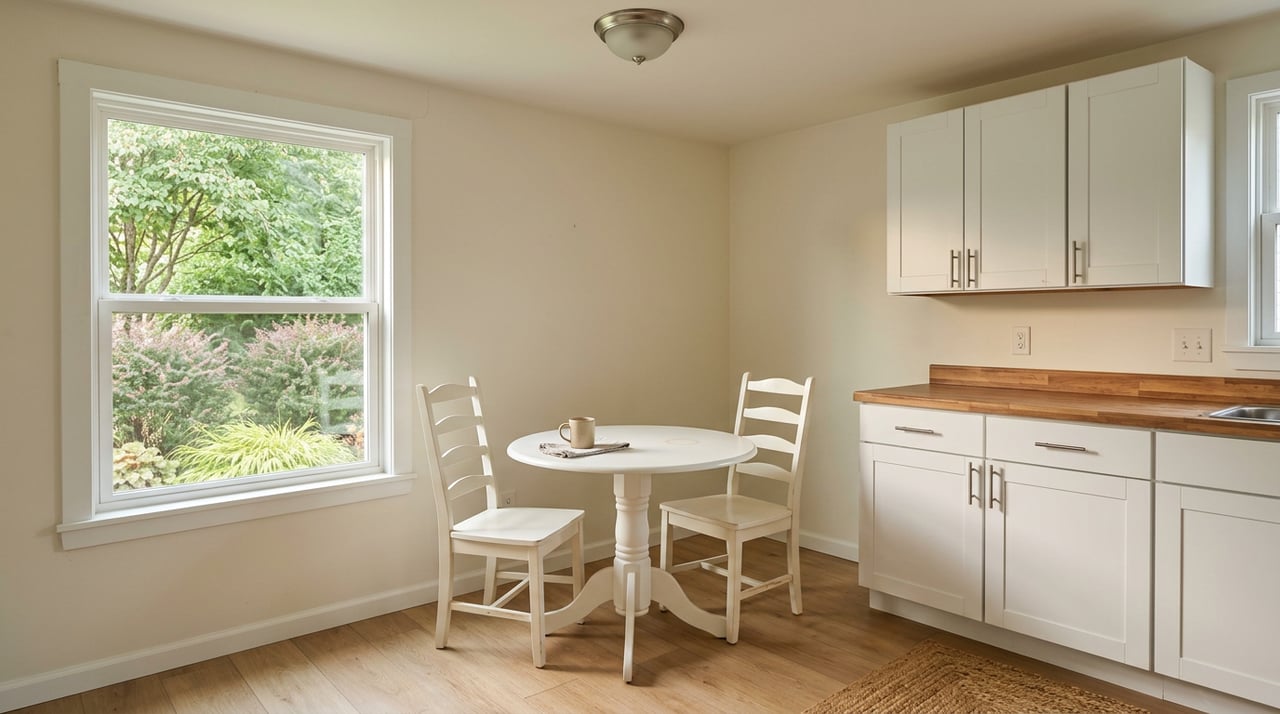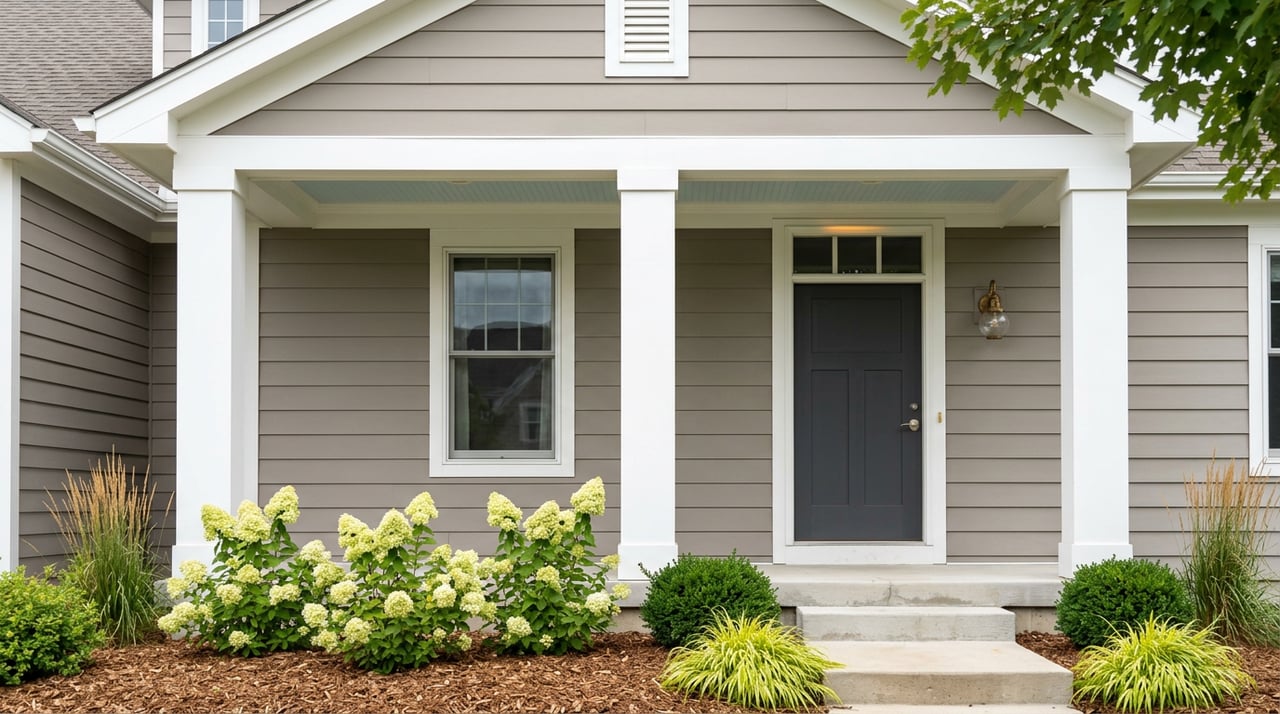
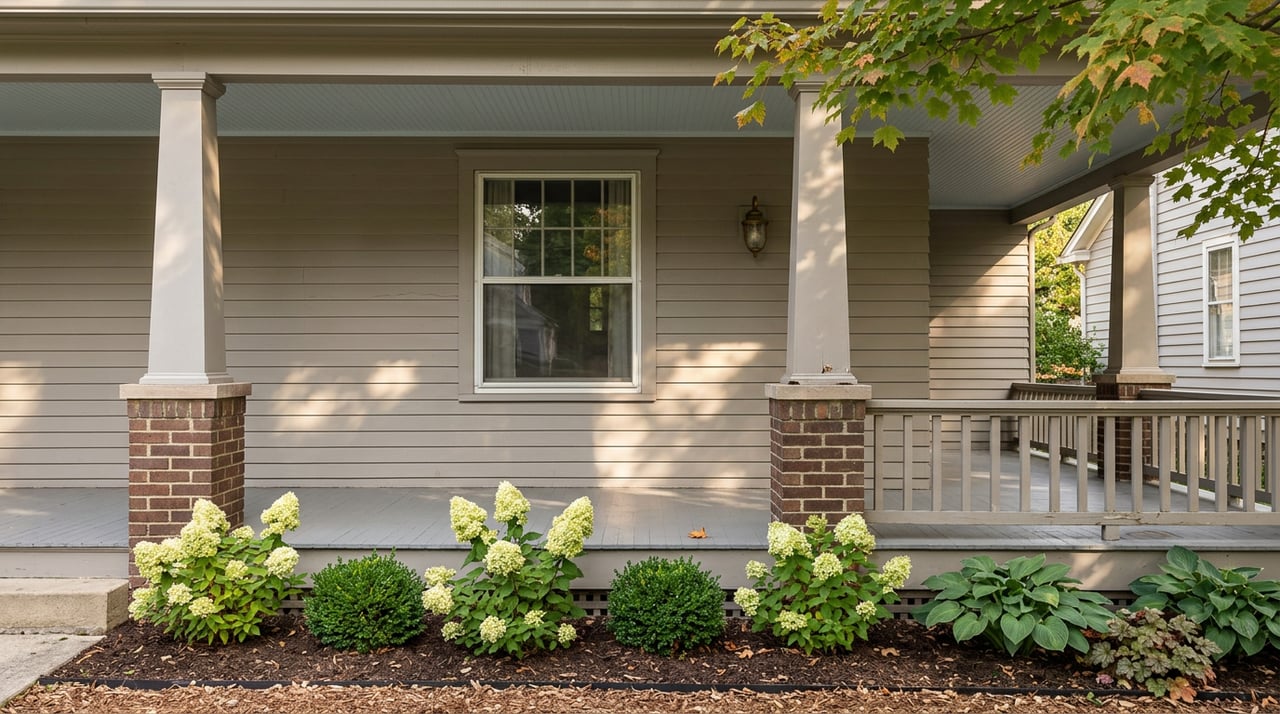
A buyer walks through a Foursquare two blocks from Carleton College, the kind of house with a deep porch and multi-pane windows that made someone fall for Northfield in the first place. Their agent mentions the word "historic," and their mind jumps to design review boards, permit delays, a city commission that has to sign off before you can replace a window. None of that applies to this house. What does apply is something nobody mentioned on the tour: the wiring behind that plaster, and whether an insurer will write a policy on it before closing.
That gap, between the regulation buyers assume and the friction that's actually there, is worth understanding before you write an offer on one of Northfield's older homes.
What's actually regulated, and where
Northfield's Heritage Preservation Commission does real work, but its authority has a footprint, and that footprint is smaller than most buyers picture. The Northfield Commercial Historic District was created by the City Council in 1978 and listed on the National Register of Historic Places in 1979, and it was renamed to its current form in 2004. It covers 65 contributing properties along both sides of the Cannon River, anchored by the Division Street commercial core and the 4th Street Bridge. Inside that boundary, exterior alterations, new construction, and demolition require a Certificate of Appropriateness from the HPC before a building permit can be issued.
Outside that boundary, a property only falls under the same review if it has been individually and locally designated as a heritage preservation site, which is its own deliberate process. Before the HPC can designate a property, every owner within 350 feet has to be notified, and there's a public hearing before the City Council makes the final call. That's not a formality that happens automatically because a house has good bones and a porch.
A house doesn't get preservation rules by being old. It gets them by being on the list, or by being downtown.
Where the confusion comes from
Northfield's downtown and the streets around Carleton and St. Olaf hold a real concentration of early 1900s architecture, with a handful of houses older still, in the American Foursquare, bungalow, and Victorian styles that give those blocks their character. Ranch and Cape Cod homes fill in the mid and late twentieth century suburbs on the outskirts. It's an easy mental shortcut to see a Victorian near campus and assume it carries the same oversight as a storefront on Division Street. It doesn't, unless someone has taken the separate step of designating it.
Minnesota's State Historic Preservation Office is direct about what local designation does and doesn't do: it doesn't freeze a building in place, and an owner isn't required to restore anything. The point is to review proposed exterior changes for compatibility, not to prevent a homeowner from updating a kitchen or replacing a roof. That review only exists where a property sits inside the boundary or has gone through individual designation. For the overwhelming majority of Northfield's older homes, it doesn't exist at all.
The friction that's actually there
Here's the part that should get more attention than it does. The city's own 2024 housing needs assessment found that entry-level housing in Northfield is entirely preowned, and most of it is pre-1970. That's not a side note. It means a large share of the buyers shopping at the accessible end of Northfield's market are shopping in exactly the housing stock that carries legacy systems, because that's most of what's available at that price point.
Homes built before 1950 commonly still have some knob and tube wiring in the walls or attic, wiring that lacks a grounding conductor and wasn't built for the electrical load a modern household puts on it. This is the detail that actually slows down closings on older homes, not a design review board. Insurers have gotten more aggressive about flagging it, and a policy application on a house with active knob and tube, or an older panel brand insurers consider higher risk, can come back with a rider requiring an upgrade within a set window, or a flat non-renewal. That's a financing problem, not a permitting problem, and it can surface late enough in a transaction to be genuinely stressful if nobody looked for it early.
The safety net that isn't there
Some Minnesota cities require a Truth-in-Sale-of-Housing inspection before a home can be listed, a seller-ordered report focused on conditions that present a risk to life or health. It's meant to hand buyers accurate information up front, and in most of those cities the seller isn't even required to make the repairs it flags, just disclose them. Northfield isn't one of those cities. A recent industry review of Minnesota's TISH requirements shows the program concentrated in inner-ring Twin Cities suburbs, places like St. Paul and Richfield, and Northfield doesn't appear on the list.
That absence matters more on an older home than a newer one. In a TISH city, a buyer gets a baseline municipal inspection as a backstop. In Northfield, the only inspection standing between you and whatever is behind that plaster is the one you pay for yourself. On a house built in 1915 versus one built in 1995, that's not a small difference in what your own inspector needs to be looking for.
What this means if you're buying right now
Northfield's market isn't giving buyers much room to slow down and think this through. Average sale prices have run around $363,000 this summer, up roughly 8.4% year over year, and homes have been moving to pending in about 16 days, the kind of pace that pushes buyers toward waiving contingencies to win a house. That instinct works against you on exactly the housing stock where inspection matters most.
A few things worth doing before you write an offer on an older Northfield home:
- Ask the listing agent whether the electrical panel has been photographed or documented, and what era it dates to.
- Get a homeowner's insurance quote before you remove your inspection contingency, not after. An insurer's underwriting questions will surface wiring and panel issues faster than a casual walkthrough will.
- Tell your inspector directly that you want knob and tube signs, ungrounded outlets, and panel brand flagged specifically, since a general inspection may only note the panel from the outside without opening it.
- Budget time for a licensed electrician's evaluation if the general inspection raises questions, since that's a different scope of work than what a standard home inspector provides.
None of this requires city approval. It requires knowing where to look, and looking before the offer deadline instead of after the earnest money is down.
A few straightforward questions
Do I need Heritage Preservation Commission approval to renovate a Victorian near Carleton or St. Olaf? Almost certainly not, unless that specific property has gone through individual local designation. The Commission's design review authority applies to the 65-building downtown Commercial Historic District and to any property individually designated through its own public process. Most residential streets near the colleges fall outside both.
Is there a city inspection I can rely on before buying an older home in Northfield? No. Northfield doesn't appear on the list of Minnesota cities requiring a Truth-in-Sale-of-Housing or point-of-sale inspection, a program more common in inner-ring Twin Cities suburbs. Your own inspection is the only one that happens.
Where does most of Northfield's early housing stock sit? Concentrated downtown and in the neighborhoods around Carleton and St. Olaf, with early 1900s Foursquares, bungalows, and Victorians, and a few homes older still. Newer construction and mid-century ranch and Cape Cod styles fill in as you move toward the edges of town.
If you're weighing one of Northfield's older homes against something newer on the outskirts, the conversation worth having isn't about preservation paperwork. It's about wiring, insurance, and what your own inspection needs to catch that the city won't catch for you. Marissa Babcock works Northfield's market from both sides of that conversation, staging-ready listings and clear-eyed buyer representation, and can walk you through what a specific property actually requires before you write the offer. Schedule a free consultation or request an instant home valuation to start the conversation with real numbers in front of you.